VIC 3978 · City of Casey · 46 km from Melbourne CBD · Updated June 2026

Clyde North, Victoria.

Modern estate housing, a rapidly expanding school network, and one of Melbourne's outer south-east corridor's most active first-home buyer and young family markets. KR Peters Real Estate has worked this corridor since 1982.

$749K–$750K
Median House Price
CoreLogic via YIP 2026
3.31%
Annual Capital Growth
CoreLogic via YIP 2026
41
Avg Days on Market
CoreLogic via YIP 2026
1,113
Houses Sold (12 mths)
CoreLogic via YIP 2026
$600
Median Weekly Rent
CoreLogic via YIP 2026
46km
Distance from CBD
Clyde North VIC 3978
Live in Clyde North?Free, no-obligation estimate, straight from a local agent.

01 · Suburb Overview

Clyde North VIC 3978. What it actually is.

Clyde North is a residential suburb in the City of Casey, approximately 46 km south-east of Melbourne CBD. It sits within the Clyde North Precinct Structure Plan area, bounded by Grices Road to the north, Cardinia Creek to the east, Thompsons Road to the south, and Pound Road to the west.

The median house price is $749,000 to $750,000 (CoreLogic via YIP 2026) with 3.31% annual capital growth. Average days on market is 41. With 1,113 house sales in the past 12 months, Clyde North is one of the highest-volume sales suburbs in Melbourne's outer south-east — a direct reflection of its active land release pipeline and strong first-home buyer and young family demand.

Clyde North's growth story is structural. The City of Casey is one of Victoria's fastest-growing municipalities, and Clyde North is among its most active development precincts. Schools, retail, road infrastructure, and community facilities continue to be delivered as population grows. It is a suburb still being built, with each year bringing additional amenity.

Postcode key data

  • Location46 km south-east of Melbourne CBDCity of Casey · Berwick-Cranbourne Road corridor
  • Median price$749K–$750K (houses) · CoreLogic 20263.31% annual capital growth · 1,113 sales per year
  • Days on mkt41 days averageHigh-volume sales market · active land release pipeline
  • Rental$600 per week median · 3.97% yieldCoreLogic via YIP 2026
  • TrainNo station in suburb · bus connectionsCranbourne Station approx 7 km · Berwick Station approx 10 km
  • LGACity of CaseySelandra Rise Town Centre · Clyde lifestyle centre
  • KR PetersActive in Clyde North since 1982432 Princes Highway, Officer VIC 3809 · 0418 311 048
Direct answer — What is Clyde North VIC like?

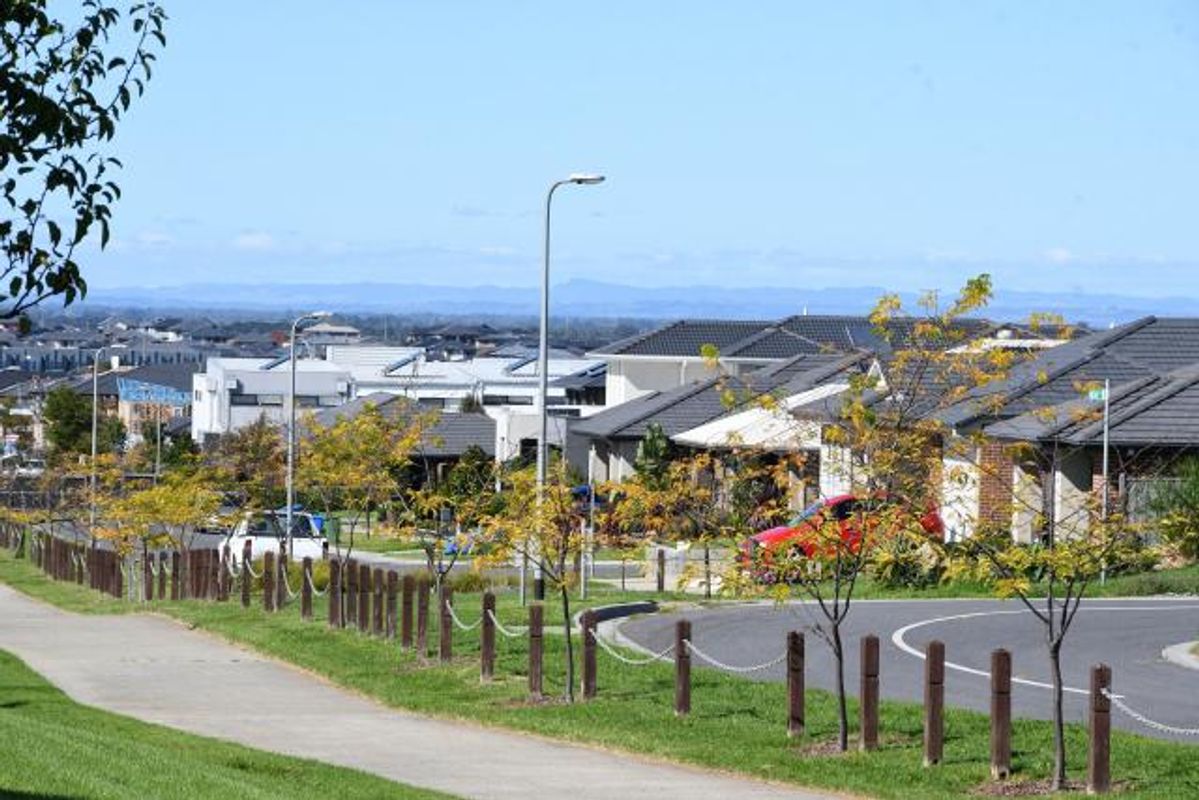
Clyde North is a master-planned, fast-growing outer suburban estate community built predominantly across the 2010s and still expanding. Wide estate streets, new-build housing on tight to mid-size lots, and a family-oriented demographic define the suburb's character. It is not an established suburb. Its appeal is affordability relative to closer-in south-east Melbourne, modern housing stock, and a growing local school and retail network.

First-home buyers, young families, and multicultural communities seeking modern housing at accessible price points are the dominant buyer groups. At a $749,000 to $750,000 median, Clyde North sits well below Melbourne's broader median, with genuine capital growth on record and ongoing infrastructure investment reinforcing long-term value.

Clyde North VIC streetscape

02 · Property Market

What is the median house price in Clyde North in 2026?

House and unit data, rental numbers, and how Clyde North stacks up against the suburbs around it. Figures below come from CoreLogic, updated June 2026.

Different providers quote different medians depending on snapshot period. CoreLogic via YIP (to approximately March 2026) reports $749,000 with 3.31% growth; CoreLogic-derived platforms in May–June 2026 report approximately $840,000 (which includes the broader postcode 3978 area covering both Clyde North and Clyde). The $749,000 figure is the Clyde North-specific median. Check with a local agent before acting on any of these numbers.

Houses

$749K–$750KMedian house price rangeCoreLogic via YIP 2026
3.31%Annual capital growthCoreLogic via YIP 2026
41 daysAvg days on marketCoreLogic via YIP 2026
1,113 salesPast 12 monthsCoreLogic via YIP 2026
$600/wkMedian weekly rentCoreLogic via YIP 2026
3.97%Gross rental yieldCoreLogic via YIP 2026

Clyde North vs nearby suburbs (houses)

SuburbMedian houseDays on mktCharacter
Clyde North$749K–$750K41Growth estate, high volume
Officer~$786K~38New estate, smaller lots
Pakenham$715K–$767K14–15Growth hub, dual rail
Beaconsfield$1.0M–$1.16M28–34Established, heritage
Market read · May 2026

"Clyde North is a volume market. Over 1,100 house sales in the past 12 months tells you exactly what kind of suburb this is — high turnover, active land releases, and a buyer pool dominated by first-home buyers and young families who are energised by the federal 5% deposit scheme and Melbourne's relative affordability story. At this median the suburb still offers genuine value versus closer-in alternatives. What I am seeing right now is strong competition in the $680K to $820K range, particularly for four-bedroom homes in established estates close to the existing school and retail infrastructure."

Peter Nicolls · Founding Director, KR Peters Real Estate · May 2026

As of May 2026, most of the action is in the $680K–$820K range. A well-presented home on a full block near the station or a school catchment will usually pull multiple offers inside 30 to 35 days.

Thinking about selling in Clyde North?Stock is tight right now. Worth knowing what that means for your price.
See what your home is worth →

03 · Who Lives Here

Clyde North demographics. Who actually calls it home.

ABS Census 2021 numbers for Clyde North 3978. Worth a look if you want to know who you'd actually be living near, not just what the houses cost.

31,681
Population (2021) — one of Melbourne's fastest-growing suburbs
30 years
Median age — VIC median is 38
$2,163/wk
Median household income (~$112,500/yr)
~70%
Owner-occupied
3.3
Avg people per household — well above Melbourne average
$2,167/mth
Median mortgage repayment
Families
Dominant household type — couples with children
35–44 yrs
Largest age group
India, Australia, Sri Lanka
Top three countries of birth

Source: Australian Bureau of Statistics, 2021 Census of Population and Housing.View full ABS profile →

04 · Planning & Development

What's changing in Clyde North. Plans, overlays, and approvals.

Planning decisions made now shape what this suburb looks like in five years. Here's what's in place and active for Clyde North as of 2026.

Clyde North Precinct Structure Plan — Amendment C153Gazetted Nov 2011
The Clyde North Precinct Structure Plan was approved by the Minister for Planning and gazetted on 10 November 2011 under Amendment C153 to the Casey Planning Scheme. It sets the long-term framework for residential, retail, employment, and community development across the precinct, bounded by Grices Road, Cardinia Creek, Thompsons Road, and Pound Road. This plan governs how land in the precinct continues to be developed and subdivided. If you are buying in Clyde North, understanding where your address sits within the PSP is important.
Clyde North Development Contributions PlanActive
The Development Contributions Plan for the Clyde North precinct collects levies from developers to fund parks, community facilities, roads, and drainage. Amendment VC249, effective 15 January 2024, exempts small second dwellings from existing DCP obligations. This affects buyers and developers considering dual-occupancy on existing lots within the precinct. The City of Casey administers the DCP and infrastructure delivery against it.
Springleaf Avenue Reserve deliveryActive delivery
The City of Casey has an active program for delivery of Springleaf Avenue Reserve within the Clyde North precinct. Reserve delivery is a core part of the DCP infrastructure program. Buyers purchasing near planned reserves should confirm the delivery status and timeline with the City of Casey before committing.
Clyde Road corridor upgradePlanned
The City of Casey has planned duplication of up to 14 km of the Clyde Road corridor — the primary north-south arterial — to address congestion as population grows. The upgrade will add lanes, signalise intersections, and install shared paths between Thompsons Road and the South Gippsland Highway. This is a significant road investment that will materially improve north-south connectivity through the precinct when delivered.
Victorian planning reforms — VicSmart pathways (VC282, VC288)Effective 2025
Amendment VC282, effective 8 September 2025, introduced a streamlined VicSmart pathway for single dwellings and small second dwellings on lots under 300 sqm. Amendment VC288, effective 16 October 2025, enables two-lot subdivisions to be assessed under VicSmart in eligible zones. For buyers considering dual-occupancy or small subdivision in Clyde North, these reforms affect the approval pathway and timeline.

Source: Cardinia Shire Council planning scheme amendments. Do your own due diligence at casey.vic.gov.au and vpa.vic.gov.au and planning.vic.gov.au.

05 · Lifestyle & Amenities

Living in Clyde North. What's on the doorstep.

Clyde North's amenity story is still being written. The suburb opened its lifestyle centre in 2019, has a growing school network, and Parks Victoria is investigating a new regional park. Each year delivers more infrastructure than the year before.

Clyde lifestyle centre
Opened in late 2019, anchored by Bunnings Warehouse and including an Aldi supermarket and additional retailers. The suburb's primary daily needs hub for residents in the western estate precincts.
Selandra Rise Town Centre
A neighbourhood shopping centre serving the eastern estate precincts, with supermarket, specialty stores, and food options. The primary hub for residents in the Selandra Rise estate.
Cardinia Creek Conservation Corridor
The eastern boundary of Clyde North abuts the Cardinia Creek Conservation Corridor — a protected linear reserve providing walking and cycling trails through a native vegetation corridor. A genuine bushland amenity within reach of estate residents.
Parks and wetlands
Each estate delivers local parks, wetlands, and shared paths as part of the DCP infrastructure program. Cascades on Clyde Wetlands and local reserves are already in use. Parks Victoria is investigating a new regional park on land bounded by Berwick-Cranbourne and Thompsons Roads.
Growing school network
Multiple government primaries, a new government secondary (Clyde North Secondary College, opened 2025), and established Catholic and independent options give families an expanding local education choice that did not exist five years ago.
Cranbourne for major retail
Cranbourne's established shopping centres, medical services, and broader retail precinct are approximately 7 km east. Until Clyde North's own town centres mature further, Cranbourne remains the go-to for most major shopping.
Berwick for established amenity
Berwick's established commercial, medical, and dining precinct is approximately 10 km north via Berwick-Cranbourne Road. Many Clyde North residents use Berwick regularly for services not yet available locally.
You will need a car
There is no train station in Clyde North. A car is essential for most residents. Bus connections to Cranbourne and Berwick stations exist but door-to-door CBD commutes by public transport take approximately 75 to 90 minutes.

06 · What You Should Know

Eight things most people don't know about Clyde North.

01

Clyde North takes its name from a Scottish creek

The suburb is named after Clyde Creek, a watercourse that ran between two early pastoral runs and flowed east to the Koo Wee Rup Swamp about 6 km away. The name is thought to have been inspired by the River Clyde in Scotland, reflecting the heritage of early settlers. The post office established in January 1864 carried that name until 1915, when it was renamed Clyde North to distinguish it from the adjacent Clyde railway township.

02

Residential development only began in earnest from 2007

The area west of Berwick-Cranbourne Road was brought within Melbourne's Urban Growth Boundary and the first major residential estate — Cascades on Clyde — broke ground in late 2007. Before that, the land was primarily rural and agricultural. The suburb's entire residential character has been built within the past two decades, which is why housing stock is uniformly modern and infrastructure is still being progressively delivered.

03

There is no train station in Clyde North

This is the most practically important fact for buyers assessing commutability. Clyde North has no direct rail connection. Residents access trains via bus to Cranbourne Station (approximately 7 km, about 12 minutes on Route 897) or Berwick Station (approximately 10 km, about 23 minutes on Route 888). Total door-to-door CBD commutes are approximately 75 to 90 minutes. A car is effectively required for most residents.

04

The suburb has one of the highest sales volumes in Melbourne's outer south-east

Over 1,100 house sales in the past 12 months places Clyde North among the highest-volume residential markets in the entire outer south-east corridor. That volume reflects active land releases, not speculative trading. It also means buyers have genuine comparable sales data to reference — an advantage not available in tightly held low-volume suburbs.

05

Secondary schooling is still catching up to population

Clyde North has several government primary schools and established Catholic and independent options, but the government secondary — Clyde North Secondary College — only opened for Year 7 students in 2025. Prior to that, most secondary students travelled to Berwick, Cranbourne, or Narre Warren. As the secondary matures and adds year levels, the demographic profile of buyers will broaden.

06

India and Sri Lanka are among the top countries of birth

The 2021 ABS Census shows India (26.3%) and Sri Lanka (11.1%) as two of the top three countries of birth for Clyde North residents, alongside Australia (22.9%). The suburb's multicultural profile is among the most distinctive in Melbourne's outer south-east corridor and is a structural characteristic of the suburb's identity, not a transitional phase.

07

The $680K to $820K band is where competition concentrates

Below $680K in Clyde North in 2026 means compromises on size, position, or estate quality. Above $820K you are competing for the suburb's better-positioned homes or larger lots. The $680K to $820K band is where most qualified buyers are active simultaneously, and where well-presented four-bedroom homes in established estates attract multiple offers and move within 41 days.

08

Rental yield makes Clyde North one of the stronger investor propositions in the corridor

At 3.97% gross yield with a median weekly rent of $600, Clyde North sits above the gross yields available in Beaconsfield and comparable to Officer. Low vacancy driven by strong family rental demand and the suburb's continuing population growth keeps rental stock tight. The volume of comparable sales — over 1,100 per year — provides the transparent data trail that makes the investment case straightforward to assess.

07 · Schools

Clyde North's school network. What's in the suburb and adjacent.

School supply in Clyde North is actively expanding to meet population growth. Multiple government primaries operate within the suburb, with a new government secondary opened in 2025. Catholic and independent options are also established within the suburb. Always verify current zone boundaries for a specific address before buying.findmyschool.vic.gov.au.

Government · Primary

Grayling Primary School

Opened in 2020 and located within the Berwick Waters estate in Clyde North. One of several newer government primaries built to service the suburb's rapid population growth. Strong family draw for buyers in the northern estate precincts.

Co-edPrep–6Government
Government · Primary

Ramlegh Park Primary School

One of the established government primaries serving the Clyde North estate corridor. Consistent enrolment demand from the suburb's young family demographic. Part of a government primary network that has expanded in step with residential development.

Co-edPrep–6Government
Government · Secondary

Clyde North Secondary College

The suburb's first government secondary school, opened for Year 7 students in 2025. A critical piece of infrastructure for a suburb that previously required families to travel to Berwick or Cranbourne for secondary education. Enrolments will grow progressively as year levels are added.

Co-edYear 7 onwardsGovernmentNew 2025
Catholic · Secondary

St Peter's College — Clyde North Campus

A Catholic secondary school serving the Clyde North corridor. An established private secondary option for families who prefer a Catholic education without travelling to Berwick or Cranbourne.

Co-edSecondaryCatholic
Independent · In Suburb

Hillcrest Christian College

An independent Christian school located within Clyde North, serving students from Early Learning through to Year 12. Approximately 1,400 to 1,600 students. Serves the suburb's family demographic seeking a non-government, values-based education within the suburb itself.

Co-edELC–12IndependentChristian
Note

Verify catchment before buying

Catchment boundaries in growth area suburbs change more frequently than in established suburbs as new schools open and zone boundaries are redrawn. KR Peters recommends verifying your specific address at findmyschool.vic.gov.au and directly with the relevant school before making a purchase decision based on school access.

Already own in Clyde North?Values move. It's worth a quick, free check-in.
What's my home worth? →

08 · Suburb History

Clyde North's development. How this suburb was built.

1830s

First pastoral settlement

European squatters established pastoral runs in the Clyde Creek area during the late 1830s. The land was used primarily for sheep and cattle grazing across the flat basalt plains. Clyde Creek, a watercourse flowing east toward the Koo Wee Rup Swamp, gave the area its name — thought to echo the River Clyde in Scotland, homeland of many early settlers.

1864

Clyde Post Office established

The Clyde Post Office opened on 25 January 1864, marking the area's first formal community infrastructure. Wesleyan and Anglican churches followed in 1864 and 1870, with a general store and public hall by 1884. The area's early identity centred on the township of Clyde North, separate from the later railway village of Clyde that developed to the south.

1888

Railway line opens south of the township

The railway line from Dandenong to Tooradin opened in 1888, passing approximately 1 km south of the original Clyde North township. A new Clyde formed around the railway station, and the original settlement became Clyde North. In 1915 the post office was formally renamed Clyde North when the railway station's post office took the Clyde name.

2003

Melbourne 2030 growth corridor designation

The state government's Melbourne 2030 plan designated the City of Casey corridor as a major growth area. This planning decision established the framework for large-scale residential subdivision across Clyde North, setting the conditions for the estate development wave that now defines the suburb.

2007

First residential estates begin construction

The area west of Berwick-Cranbourne Road was brought within Melbourne's Urban Growth Boundary and the first major residential estate, Cascades on Clyde, broke ground in late 2007. This was the starting point of Clyde North's transformation from rural and agricultural land to one of Melbourne's fastest-growing outer suburban communities.

2011

Clyde North Precinct Structure Plan gazetted

The Clyde North Precinct Structure Plan was approved by the Minister for Planning and gazetted on 10 November 2011 under Amendment C153 to the Casey Planning Scheme. The PSP set the long-term framework for residential, retail, employment, and community development across the precinct and governs how land continues to be developed today.

2019

Clyde lifestyle centre opens

A new lifestyle retail centre opened in late 2019, anchored by Bunnings Warehouse and followed by an Aldi supermarket and additional retailers. This was the moment Clyde North became meaningfully self-sufficient for daily needs without requiring a trip to Cranbourne or Berwick — a significant milestone in the suburb's maturation.

2025

Clyde North Secondary College opens

Clyde North Secondary College opened for Year 7 students in 2025, the suburb's first government secondary school. This was a critical infrastructure milestone for a suburb that had required secondary students to travel to Berwick, Cranbourne, or Narre Warren. The school will add year levels progressively.

40+Years KR Peters has sold in the Casey corridorKR Peters records
2007Year first residential estates beganCity of Casey records
75–90 minDoor-to-door CBD commute via trainPTV timetable 2026
46 kmDistance from Melbourne CBDClyde North VIC 3978

09 · Getting Around

How far is Clyde North from Melbourne CBD?

Public transport

  • Route 897 connects Clyde North to Cranbourne Station in approximately 12 minutes, with services departing every 30 minutes. Cranbourne Station is on the Cranbourne line, providing direct services to Flinders Street. Total door-to-door CBD commute is approximately 75 to 90 minutes.
  • Route 888 connects Clyde North to Berwick Station in approximately 23 minutes, operating hourly. Berwick Station is on the Pakenham line. Route 889 provides an additional Berwick Station connection via Grices Road and the northern estate precinct.
  • Route 881 connects Clyde North to Merinda Park Station, providing access to the Cranbourne line and improving connectivity to health services and schools.
  • There is no train station within Clyde North itself. All rail access requires a bus connection or a drive to Cranbourne Station (approximately 7 km) or Berwick Station (approximately 10 km). A private vehicle is effectively required for most residents.

Roads and driving

  • Berwick-Cranbourne Road is the primary north-south arterial through Clyde North, providing the main connection north to Berwick and south toward Cranbourne. It is the highest-traffic road in the suburb and the primary access corridor for most estate precincts.
  • Thompsons Road is the major east-west connector along the suburb's southern boundary, linking Clyde North to Cranbourne in the east and Narre Warren in the west.
  • The Princes Freeway provides freeway access to Melbourne CBD via Berwick. From Clyde North, driving to the CBD via the Princes Freeway and Monash Freeway takes approximately 50 to 70 minutes depending on traffic.
  • The City of Casey has planned duplication of up to 14 km of the Clyde Road corridor to address congestion as population grows, adding lanes, signalising intersections, and installing shared paths between Thompsons Road and the South Gippsland Highway.

10 · Who Buys Here

The Clyde North buyer. Who is purchasing in this market.

01

First-home buyers and young families

Clyde North's $749,000 to $750,000 median sits well below Melbourne's broader median, making it one of the most accessible outer south-east options for first-home buyers with federal deposit incentives. The combination of modern housing stock, expanding school infrastructure, and a family-oriented community profile makes Clyde North a consistent target for buyers purchasing their first or second home.

02

Multicultural buyers seeking new housing in a community-oriented suburb

Clyde North has a strongly multicultural demographic, with a median resident age of 30 and household sizes averaging 3.3 people. The 2021 Census shows India and Sri Lanka among the top countries of birth. The suburb's modern housing stock, community facilities, and proximity to multicultural-oriented services in Cranbourne and Berwick make it a consistent draw for buyers from diverse cultural backgrounds.

03

Investors attracted by yield and volume

At 3.97% gross yield and a median weekly rent of $600, Clyde North offers one of the stronger yield propositions in Melbourne's outer south-east. Low vacancy driven by strong family rental demand and the suburb's continuing population growth supports investor returns. The volume of comparable sales — over 1,100 per year — provides the transparent data trail that makes the investment case straightforward to assess.

Questions

What buyers and vendors actually ask about Clyde North.

Straight answers on the Clyde North market, the process, and what working with KR Peters in this suburb looks like.

The median house price in Clyde North VIC 3978 is approximately $749,000 to $750,000 (CoreLogic via YIP 2026), with 3.31% annual capital growth across 1,113 house sales in the past 12 months. Average days on market is 41. Rental yield sits at approximately 3.97% with median weekly rent of $600.
Clyde North's unit market is very small, with only 15 unit sales in the past 12 months. The median unit price is approximately $600,000 with 3.45% annual growth and an average of 42 days on market. The suburb is overwhelmingly a house market.
Clyde North is 46 km south-east of Melbourne CBD. There is no train station in the suburb. Residents access trains via bus to Cranbourne Station (approximately 7 km) or Berwick Station (approximately 10 km), with total door-to-door CBD commutes of approximately 75 to 90 minutes. By car via the Princes Freeway and Monash Freeway, driving time is approximately 50 to 70 minutes depending on traffic.
Government primary schools include Grayling Primary School, Ramlegh Park Primary School, Topirum Primary School, and Wilandra Rise Primary School. Clyde North Secondary College opened for Year 7 students in 2025. Catholic and independent options include St Peter's College — Clyde North Campus and Hillcrest Christian College. Additional secondary options are available in nearby Berwick and Cranbourne.
The Clyde North Precinct Structure Plan (Amendment C153, gazetted November 2011) governs all development in the precinct. The active Development Contributions Plan funds ongoing infrastructure delivery. Amendment VC249 (effective January 2024) exempts small second dwellings from DCP obligations. The Clyde Road corridor duplication is planned but timing is subject to funding. Victoria-wide reforms VC282 and VC288 (both effective late 2025) also affect how development applications are assessed.
Rental yield in Clyde North is approximately 3.97% gross based on a median house price of $749,000 and median weekly rent of $600 (CoreLogic via YIP 2026). Low vacancy driven by strong family rental demand and population growth keeps the rental market competitive.
Clyde North's market is showing solid fundamentals in 2026. 3.31% annual capital growth, 41 days on market, and over 1,100 house sales in the past 12 months demonstrates depth of buyer demand. KR Peters offers complimentary appraisals — call 0418 311 048.
Yes. KR Peters Real Estate has operated across the Casey and Cardinia corridor since 1982. Peter Nicolls, Founding Director and Licensed Auctioneer, is the primary agent for the area. Call 0418 311 048 for a complimentary appraisal or market consultation.

Market data sourced from CoreLogic 2026 and KR Peters property records. Statistics represent suburb-level aggregates and are updated periodically. Median prices, days on market, and yields are indicative only. Verify current data with your agent before making buying or selling decisions.